
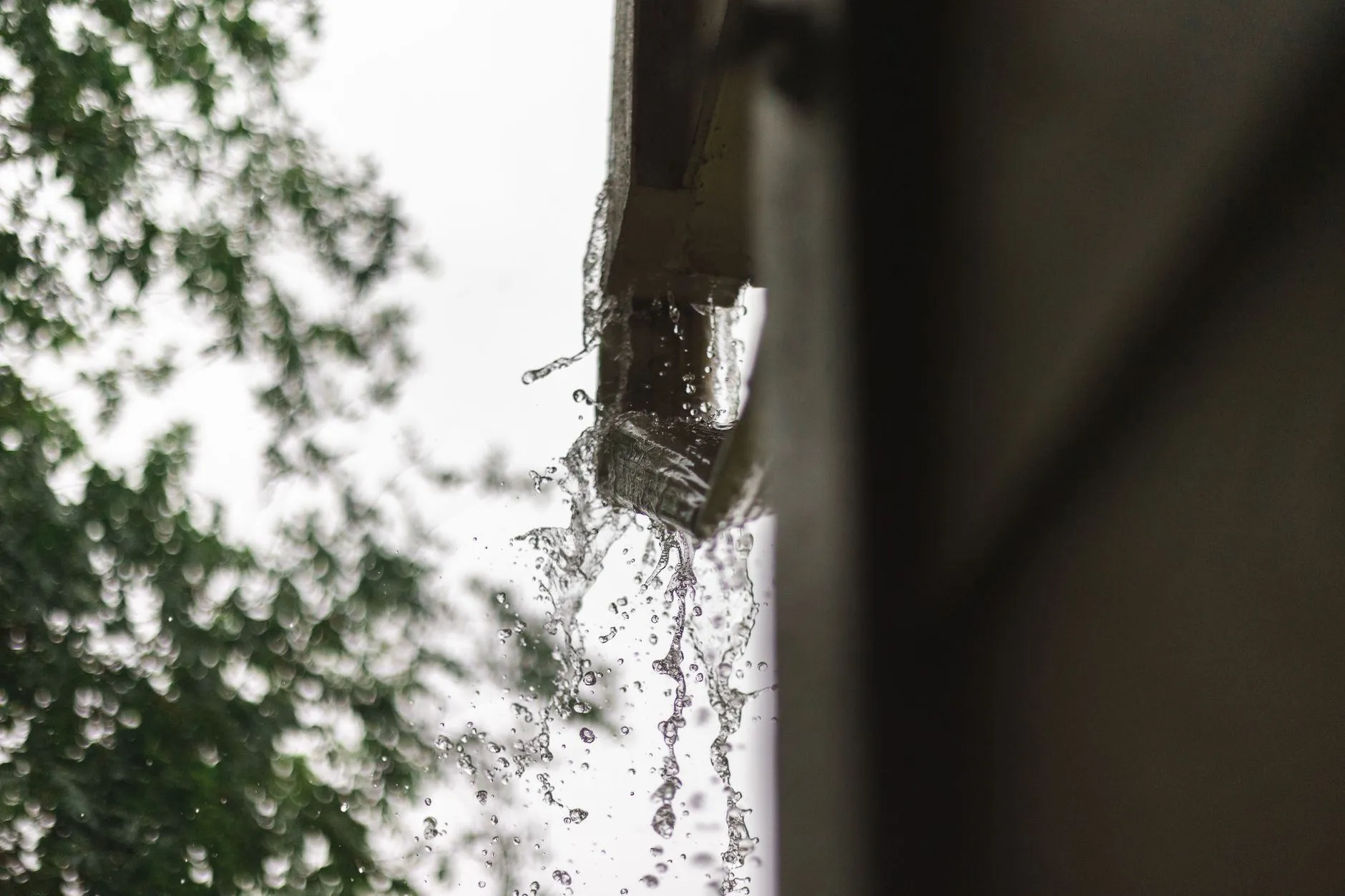
Why Are Clean Gutters Still Overflowing in Heavy Rain?
Clean gutters still overflowing in heavy rain usually means the problem is how much water reaches one spot, not debris. The three common causes are concentrated runoff from a roof valley, a gutter that is pitched the wrong way or sagging, and outlets or downspouts that cannot carry the volume a storm delivers. Where the water spills tells you which one to suspect.
This guide is for Marysville homeowners whose gutters overflow even after cleaning. It compares the three causes, gives a checklist for recording the spills, and explains what a contractor can measure.
Why do gutters overflow after cleaning?
Because cleaning removes debris, but it does not change how much water a gutter receives, which way it slopes, or how fast its outlets drain. A gutter can be empty and still be undersized for one section of roof, pitched away from its downspout, or drained by an outlet that is too far away. Before looking further, rule out leftover debris:
- Check whether the downspouts were cleared as well as the gutter troughs. A blockage in an elbow or the lower pipe can make a clean gutter back up.
- Look for new debris after a windy day, especially under trees.
- Watch whether overflow happens in every rain or only in hard, steady downpours.
If the downspouts flow freely and the gutters overflow after cleaning only in heavy rain, the cause is most likely one of the three below.
How does a roof valley make gutters overflow?
A roof valley gathers water from two slopes and delivers it to one short stretch of gutter. In heavy rain, that concentrated stream can hit the gutter fast enough to shoot over the front edge, or fill the trough faster than it drains toward the outlet. Gutter overflow at a roof valley usually looks like this:
- A spill in one spot, directly below where two roof slopes meet, often at an inside corner.
- Water jumping over the front lip of the gutter instead of spilling evenly along it.
- Splash marks on the siding, washed-out mulch or a small trench in the soil below that corner.
Common responses include a splash guard at the corner, an outlet closer to the valley, or a larger gutter on that run. Which one fits depends on the measurements described further down.
How does gutter pitch cause overflow?
Gutters need a slight slope toward their outlets. Gutter pitch problems either leave water standing in the trough or send it toward the wrong end, where it spills before reaching a downspout. Signs to look for:
- Water still standing in a clean gutter a day after rain.
- Overflow at the end of a run farthest from the downspout, or in the middle of a long run.
- A run that visibly dips between hangers, or a section pulling away from the house.
- Overflow that started after a storm, a fallen branch or work on the roof.
Sagging often comes from loose or failed hangers, or from fascia boards that no longer hold fasteners well. The Gutters And More LLC home page points out that proper adjustment, slope and downspout placement are what help water move toward the outlets, which is why pitch is one of the first things to check.
Can there be too few outlets or downspouts?
Yes. Even a clean, well-pitched gutter overflows if water reaches the outlet faster than the outlet and downspout can carry it away. Limited outlet capacity tends to show up as:
- Water building up and spilling around an outlet that is not clogged.
- A long run drained by a single downspout at one end.
- A large or steep section of roof feeding a gutter with few outlets.
- Overflow that grows as a storm goes on and stops when the rain eases.
Fixes range from adding an outlet and downspout to moving to a larger gutter. Gutters And More LLC installs K-style gutters in five-inch and six-inch sizes, so an estimate can compare an adjustment, added outlets or a larger gutter on the runs that overflow.
What should you record when gutters overflow?
Record where each spill starts, how widespread it is, and how hard it was raining. Watch from the ground or from a window, never from a ladder in the rain. Use this checklist:
- Each spot where water spills, marked on a simple sketch of the house or by the nearest door or window.
- Whether the spill is at a corner below a valley, along the middle of a run, at an end, or right at a downspout.
- Whether it spills in every rain or only in heavy downpours.
- Whether water stays in the gutter after the rain stops.
- Short phone videos of the overflow, and photos of any sagging section or gap behind the gutter.
- Damage below the spill: eroded soil, splashed siding, damp basement walls or water near the foundation.
A record from two or three storms shows whether the problem is local, such as one valley, or spread across the whole system, which points to outlet capacity or gutter size.
What can a gutter contractor measure during an assessment?
A contractor can check the conditions that separate one cause from another. Points worth asking about when requesting an estimate:
- The slope of each run, checked with a level, and any low spots between hangers.
- The spacing and condition of hangers, and whether the fascia behind the gutter is sound.
- The number and position of outlets and downspouts, and how much roof drains to each run.
- The size of the existing gutters and downspouts.
- Where valleys deliver water and whether a corner needs a guard or an added outlet.
The findings can lead to cleaning, an adjustment or repair, or replacing a run with a larger size. Gutters And More LLC provides <a href="https://guttersmorellc.com/services/gutter-repair-services">gutter repair services</a> for leaks, sagging gutters and improper drainage, and <a href="https://guttersmorellc.com/services/gutter-and-downspout-cleaning-services">gutter and downspout cleaning</a> to clear blocked outlets.
Frequently asked questions about clean gutters that overflow
Why do my gutters overflow only in heavy rain?
In light rain, the gutters and downspouts carry the water easily. In a heavy downpour, more water arrives than one section, one outlet or one downspout can move, so it spills over. Spills in the same spots every storm usually point to a valley, a pitch problem or too few outlets.
Do gutter guards stop clean gutters from overflowing?
Usually not. Guards help keep debris out, but they do not change the slope or the outlet capacity, and heavy runoff from a valley can overshoot a guard too. If the gutters overflow when they are clean, the cause is water volume or pitch rather than debris.
Is gutter overflow at one corner a serious problem?
It can become one. Water that spills in the same spot during every storm can erode soil, stain the siding and send water toward the foundation or a crawl space. Recording the spot and having that run checked is a simple first step.
Can I fix gutter pitch myself?
Adjusting a gutter means working on a ladder at the roof edge and moving hangers in the fascia, which carries a real risk of falling. Homeowners can safely check pitch from the ground by noting where water stands after rain. The adjustment itself is better left to a gutter crew with the right equipment.
Get overflowing gutters checked by Gutters And More LLC
Gutters And More LLC is a gutter company based in Marysville, WA. It provides gutter installation, gutter repair, and gutter and downspout cleaning, and serves Marysville, Seattle, Bellevue, Kirkland, Everett and nearby communities, with free estimates. Homeowners can see the <a href="https://guttersmorellc.com/services/marysville-wa">gutter services offered in Marysville, WA</a>, call 425-314-1602, or <a href="https://guttersmorellc.com/contact">request a free estimate</a> and share their notes on where the gutters spill.